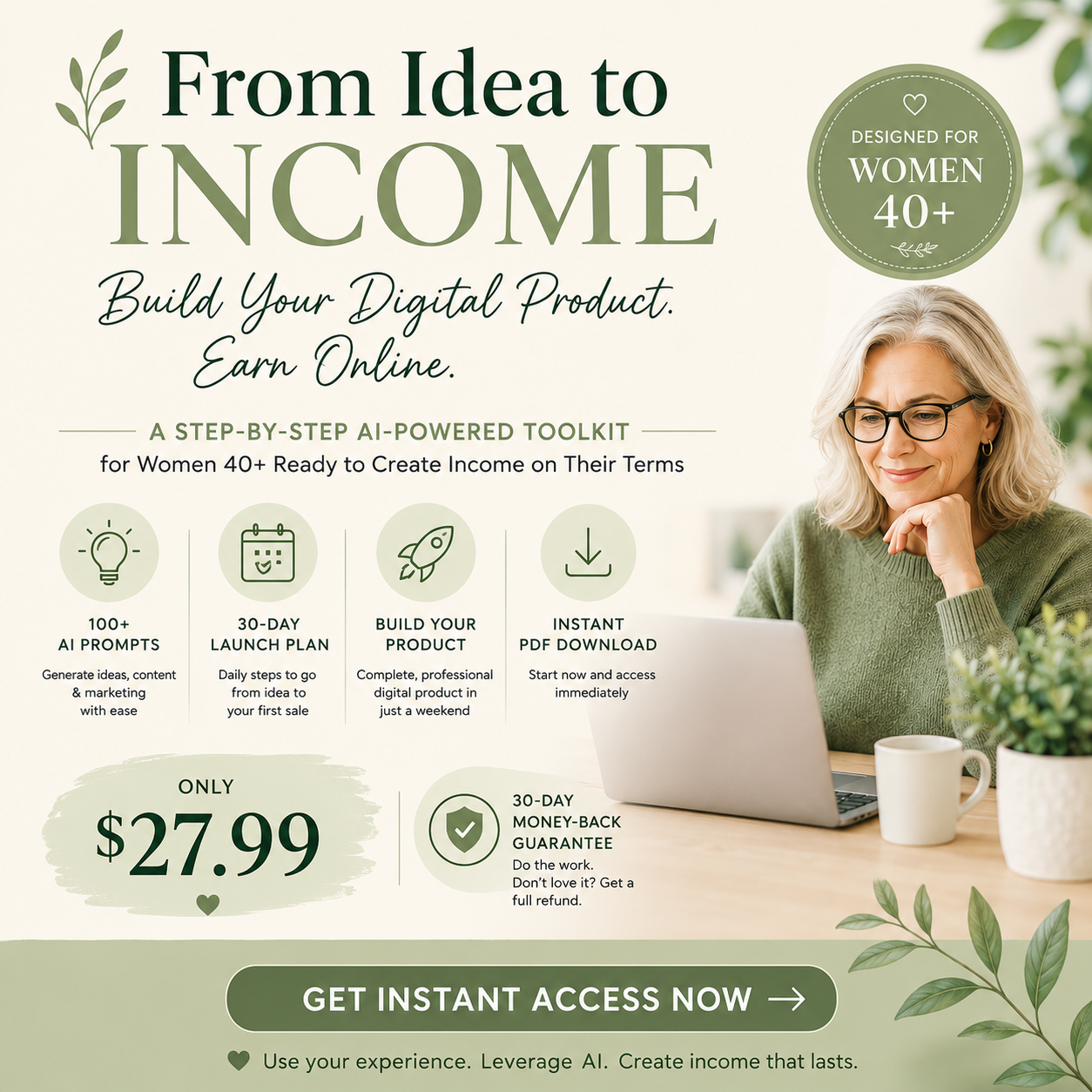

Let me paint you a picture.
It's a Tuesday morning. You're sitting at your kitchen table with a cup of coffee, still in your dressing gown. Your laptop is open. And while you were sleeping last night, someone on the other side of the country read one of your blog posts, clicked a link you recommended, bought a product — and you earned a commission.
You didn't have to be awake. You didn't have to answer a phone call. You didn't have to drive anywhere or clock in anywhere. It simply happened — because of something you wrote weeks ago.
That is affiliate marketing.
And before you roll your eyes and think "that sounds too good to be true" — I completely understand. I thought the same thing. Which is exactly why I'm going to explain it to you today in the most honest, straightforward way I possibly can.
No hype. No income claims. No "secret systems." Just a clear, plain-English explanation of what affiliate marketing actually is, how it actually works, and whether it's actually right for you.
By the end of this post, you will know:
✅ Exactly what affiliate marketing is — in simple, everyday language
✅ How the money actually gets from the company to your bank account
✅ The honest pros and cons — including the parts most people don't tell you
✅ Which affiliate programs are the best starting points for beginners
✅ How to get started without feeling overwhelmed
Let's begin.
Quick Navigation:
- What is Affiliate Marketing — Really?
- How Does the Money Actually Work?
- A Real-Life Example You Can Relate To
- The Honest Pros and Cons
- Is Affiliate Marketing Right for You?
- The Best Beginner Affiliate Programs
- How to Get Started This Week
- Common Questions Answered
What is Affiliate Marketing — Really?
Let's strip away every piece of jargon and get to the heart of it.
Affiliate marketing is simply this:
You recommend a product or service you believe in. Someone buys it through your recommendation. The company pays you a "thank you" fee.
That's it. That is the entire concept.
You are not selling anything directly. You are not handling any products, managing any inventory, or dealing with customer service. You are simply acting as the trusted middleman — the friend who says "I've tried this and it's brilliant, here's where to get it."
The company handles everything else. The product, the payment, the delivery, the customer support. Your job is simply to make the recommendation.
And here's the part that makes it particularly powerful for bloggers and content creators: your recommendation doesn't disappear after you make it. A blog post you write today can continue recommending products — and earning commissions — for months or even years after you publish it.
That is what people mean when they talk about "passive income." Not that you do nothing — you absolutely have to do the work upfront. But once that work is done, it keeps working for you long after you've moved on to the next thing.
How Does the Money Actually Work?
This is the question I get asked most often, so let's walk through the mechanics clearly.
Step 1: You Join an Affiliate Program
Most companies that sell products or services online have an affiliate program. You apply to join (it's usually free and straightforward), and once approved, you receive a unique tracking link — called an affiliate link — for each product you want to promote.
Step 2: You Share Your Affiliate Link
You include this link in your blog posts, your YouTube video descriptions, your email newsletters, or your social media posts. When you recommend a product, instead of linking to the company's website directly, you link using your unique affiliate link.
Step 3: Someone Clicks Your Link
When a reader clicks your affiliate link, a small piece of data called a "cookie" is stored on their browser. This cookie tells the company "this person came from [Your Name]'s recommendation."
Step 4: They Make a Purchase
If that person goes on to purchase the product — whether immediately or within a set window of time (usually 30–90 days, depending on the program) — the company's system automatically records that the sale came from you.
Step 5: You Earn a Commission
The company pays you a percentage of the sale — called a commission — directly into your account. Depending on the program, this could be anywhere from 3% to 50% or more of the sale price.
Step 6: You Get Paid
Most affiliate programs pay out monthly, either via bank transfer, PayPal, or cheque, once you reach a minimum payment threshold (usually $50–$100).
💡 Important: The buyer pays exactly the same price they would have paid if they'd gone directly to the company's website. Your commission comes out of the company's marketing budget — not out of the buyer's pocket. This is a crucial point to understand and to communicate to your readers.
A Real-Life Example You Can Relate To
Let me make this even more concrete with a real example.
Imagine you write a blog post called "The 5 Tools I Use to Run My Online Business From Home."
In that post, you mention that you use SiteGround for your website hosting. You explain why you chose it, what you love about it, and why you'd recommend it to any beginner.
At the end of that section, you include your SiteGround affiliate link: "Click here to get started with SiteGround."
A reader named Margaret finds your post on Google. She's been thinking about starting a blog for months. She reads your honest review, trusts your recommendation, and clicks your link. She signs up for SiteGround hosting.
SiteGround pays you a commission — typically between $50 and $100 for a new hosting referral.
Margaret got a great hosting service she needed. SiteGround got a new customer they wouldn't have had otherwise. And you earned a commission for making the introduction.
Everyone wins.
Now imagine that blog post is found by not just Margaret, but by fifty Margarets over the next twelve months. That single post — written once — could generate $2,500 to $5,000 in commissions over the course of a year.
That is the power of affiliate marketing combined with a well-written blog.
The Honest Pros and Cons
I promised you honesty, so here it is — the full picture, including the parts that most "make money online" guides conveniently leave out.
✅ The Genuine Advantages
1. Very Low Startup Cost
You don't need to create a product, hold inventory, or invest thousands of dollars upfront. Your main investment is your time and a small amount for hosting and a domain name.
2. No Customer Service Headaches
You are not responsible for the product, the delivery, or any complaints. If a customer has an issue, they contact the company — not you. This makes affiliate marketing one of the most stress-free income models available.
3. Unlimited Income Potential
There is no ceiling on what you can earn. The more helpful content you create, the more readers you attract, and the more commissions you can earn. Some affiliate bloggers earn hundreds of thousands of dollars per year — though I want to be clear that this takes years of consistent work to achieve.
4. It Works While You Sleep
Once your content is published and your affiliate links are in place, the system works around the clock. You can earn commissions on a Sunday morning while you're at church, or on a Wednesday afternoon while you're at a doctor's appointment.
5. You Can Promote Products You Already Love
The best affiliate marketers recommend products they genuinely use and believe in. This makes the work feel authentic rather than "salesy" — and your readers can tell the difference.
❌ The Honest Disadvantages
1. It Takes Time to Build
This is the most important thing I want you to hear. Affiliate marketing is not a "get rich quick" strategy. Most bloggers don't earn significant affiliate income until six to twelve months after they start — sometimes longer. If you need income within the next thirty days, this should not be your only strategy.
2. You Don't Control the Product
If a company changes its product, raises its prices, or closes its affiliate program, your income from that product disappears. This is why I always recommend promoting products from multiple companies rather than relying on just one.
3. You Need Traffic First
Affiliate links only earn money when people click them. And people only click them when they find your content. Building the traffic that makes affiliate marketing profitable takes consistent effort over many months.
4. It Requires Transparency
In most countries — including the US, UK, Canada, and Australia — you are legally required to disclose when you are using affiliate links. This is actually a good thing (it builds trust with your readers), but it's important to know and follow the rules.
5. Not Every Product Converts
Some products you recommend will earn you commissions regularly. Others will earn you nothing, despite your best efforts. Learning which products resonate with your audience takes time and experimentation.
Is Affiliate Marketing Right for You?
Based on everything above, affiliate marketing is likely a great fit for you if:
✅ You are patient and willing to play the long game
✅ You enjoy writing or creating content
✅ You have a topic you're genuinely knowledgeable and passionate about
✅ You want an income stream that can eventually work without your constant attention
✅ You are comfortable being honest and transparent with your audience
It may not be the right first step if:
❌ You need income within the next 30 days (consider freelancing first)
❌ You are not willing to create content consistently
❌ You want guaranteed results on a fixed timeline
If you ticked most of the boxes in the first list — welcome. You're in the right place.
The Best Beginner Affiliate Programs
Now let's get practical. Here are the affiliate programs I recommend for women who are just starting out — chosen specifically because they are trustworthy, beginner-friendly, and relevant to the topics most women over 50 write about.
🌐 1. Amazon Associates
What it is: Amazon's affiliate program — one of the largest and most well-known in the world.
Commission Rate: 1%–10% depending on the product category.
Best for: Bloggers who review or recommend physical products — books, kitchen equipment, gardening tools, craft supplies, health products, and more.
Why I recommend it for beginners: Almost everyone trusts Amazon. When you recommend a product and link to Amazon, your readers are already comfortable buying there. The conversion rate (the percentage of people who click and then buy) is consistently high.
One caveat: The commission rates are relatively low compared to other programs, and the cookie window is only 24 hours. But the sheer volume of products available and the trust factor make it a solid starting point.
How to join: Search "Amazon Associates" and apply directly on their website.
📧 2. MailerLite
What it is: An email marketing platform — the tool your readers will use to build their own email lists.
Commission Rate: 30% recurring monthly commission.
Best for: Bloggers in the online business, blogging, or "make money online" niche.
Why I recommend it: The recurring commission model is particularly powerful. If someone signs up for MailerLite through your link and stays a customer for two years, you earn 30% of their monthly fee every single month for those two years. That is genuinely passive income.
How to join: Go to MailerLite.com and look for their affiliate or partner program in the footer.
🎨 3. Canva
What it is: The design tool used by millions of bloggers, small business owners, and content creators worldwide.
Commission Rate: A percentage of the Canva Pro subscription.
Best for: Any blogger, regardless of niche — because virtually every blogger needs design tools.
Why I recommend it: Canva is genuinely one of the most useful tools available to beginner bloggers. Recommending it feels completely natural and authentic, which makes it one of the easiest affiliate products to promote.
How to join: Search "Canva Affiliate Program" and apply through their website.
🖥️ 4. SiteGround
What it is: Web hosting — the service every blogger needs to have a website.
Commission Rate: $50–$100+ per referral, depending on the plan purchased.
Best for: Bloggers who write about blogging, online business, or working from home.
Why I recommend it: Hosting commissions are among the highest available in the beginner blogging space. A single referral can earn you $50–$100, which means even a handful of referrals per month creates meaningful income.
How to join: Go to SiteGround.com and look for their affiliate program in the footer.
📚 5. ShareASale and CJ Affiliate (Affiliate Networks)
What they are: These are not individual affiliate programs — they are networks that house hundreds of different affiliate programs under one roof.
Best for: Bloggers who want to find affiliate programs relevant to their specific niche without having to search for each one individually.
Why I recommend them: Once you're approved for ShareASale or CJ Affiliate, you can apply to dozens of individual programs from within the platform — making it much easier to manage your affiliate relationships in one place.
How to join: Search "ShareASale" or "CJ Affiliate" and apply directly on their websites.
How to Get Started This Week
You now understand what affiliate marketing is, how it works, and which programs to consider. Here is your simple, no-overwhelm action plan for this week.
Day 1–2: Choose One Program to Start With
Don't try to join every program at once. Pick one that is most relevant to your blog topic and apply. I recommend starting with Amazon Associates if you write about physical products, or MailerLite if you write about online business.
Day 3: Read the Program's Terms and Conditions
I know — terms and conditions are not exactly thrilling reading. But it's important to understand the rules of each program, including how and when you need to disclose your affiliate relationship to your readers.
Day 4: Add Your Disclosure Statement
Before you publish a single affiliate link, add an affiliate disclosure to your blog. This is a short statement that tells your readers you may earn a commission from links in your posts. Here is a simple template you can use:
"This post contains affiliate links. If you click a link and make a purchase, I may earn a small commission at no extra cost to you. I only ever recommend products I genuinely use and believe in."
Add this to the top of any post that contains affiliate links, and include a full disclosure page on your blog.
Day 5: Write Your First Affiliate Post
Choose one product you genuinely use and love. Write an honest, helpful review of it — covering what it is, who it's best for, what you love about it, and any honest drawbacks. Include your affiliate link naturally within the post.
Day 6–7: Rest and Reflect
Seriously. You've done a lot this week. Take the weekend to let it settle, re-read your post with fresh eyes, and make any adjustments before you hit publish.
Common Questions Answered
Q: Do I need a huge audience to make money with affiliate marketing?
No — but you do need some audience. A small, highly engaged and trusting audience will consistently outperform a large, disengaged one. Focus on building genuine relationships with your readers first, and the commissions will follow.
Q: Do I have to pay to join affiliate programs?
No. Legitimate affiliate programs are always free to join. If anyone asks you to pay to become an affiliate, walk away.
Q: How much can I realistically earn?
This varies enormously depending on your niche, your traffic, and the products you promote. A realistic expectation for your first year is anywhere from a few hundred to a few thousand dollars. By year two or three, with consistent effort, many bloggers earn a meaningful supplemental income — and some earn a full-time income. I will never give you specific income guarantees, because your results depend entirely on your effort and consistency.
Q: Do I have to use every product I recommend?
Technically, no — but ethically, yes. Your readers trust your recommendations. If you recommend something you've never used, and it turns out to be poor quality, you will damage that trust permanently. Only recommend what you genuinely believe in.
Q: What if I recommend something and my reader has a bad experience?
Be transparent and responsive. Acknowledge their experience, apologize for the recommendation not working out for them, and — if appropriate — suggest an alternative. Handling these situations with grace actually builds trust rather than destroying it.
Bringing It All Together
Affiliate marketing is not a magic button. It is not a "get rich quick" scheme. And it is not something that will transform your finances overnight.
But it is one of the most accessible, low-risk, and genuinely rewarding ways to build an online income — particularly for women over 50 who have a lifetime of knowledge, experience, and trustworthiness to draw on.
The formula is simple, even if the execution takes time:
Create helpful content + Recommend products you believe in + Build trust with your readers = A sustainable, growing income stream
You have everything you need to make this work. The knowledge. The life experience. The patience. And now — the understanding of how it all fits together.
All that's left is to begin.
"The women who succeed at affiliate marketing are not the ones who know the most about technology. They are the ones who show up consistently, speak honestly, and genuinely care about helping their readers. That sounds exactly like you."
📥 [Download Your Free Simple Start Roadmap — Click Here]
📺 [Watch the Companion YouTube Video — Click Here]
💬 Tell me in the comments: Which affiliate program are you going to apply for first? And do you have any questions I haven't answered above? I'm here to help.
Enjoyed this post? Pin it, share it, or forward it to a friend who's been curious about affiliate marketing. And make sure you're subscribed to the newsletter — every week I send out a new, jargon-free guide designed specifically for women like you.